
01. Stones of the sun
Egypt. The first obelisks are short and sturdy, and stand in the sun's temples. They represent the primeval mound, where the sun rose for the very first time.
Then they grow. An obelisk is carved from a single block of granite, and the tip is clad in electrum – a blend of gold and silver – that catches the sunlight. They stand in pairs in front of temple gates. The inscriptions tell of the king's victory or jubilee. The largest are over 30 metres tall and weigh hundreds of tonnes.
How is it done? At Aswan an unfinished obelisk still lies in the quarry. The technique is visible: wooden wedges soaked until they swell and split the stone.
Then comes Rome. The emperors want Egypt at home. Caligula has an obelisk shipped to his circus on the Vatican Hill. It stays there – but in the wrong place.
Rome, 1586. Pope Sixtus V wants it in the middle of St Peter's Square. The architect Domenico Fontana plans the move. It takes 907 men, 75 horses and 44 winches to raise it.
The idea lives on – now as a memorial. Copenhagen raises the Liberty Column in 1792–1797 to mark the abolition of the stavnsbånd, the tie that bound peasants to the estates, in 1788. And Washington gets an obelisk 169 metres tall: the Washington Monument.
02. How to spot it
- 1.A square pillar tapering upwards
- 2.A small pyramid on top
- 3.Often a single piece of stone, preferably granite
- 4.Stands on a plinth, alone in a square or a park
- 5.Inscriptions, hieroglyphs or a memorial text on the sides
03. The giveaway
The top. If the pillar ends in a small pyramid, it is an obelisk. A column has a capital, a stele is flat – the obelisk points straight at the sun.
04. Where to see it
- St Peter's Square, Vatican Citybrought to Rome by Caligula, moved in 1586
- Piazza del Popolo, Rome36.5 metres, from Heliopolis, in honour of Ramesses II
- Frihedsstøtten (the Liberty Column), Copenhagen1792–1797
- Washington Monument, Washington D.C.169 metres
05. In the app
1 place of this type in Everyday Grandeur. Tap it to see it on the map.
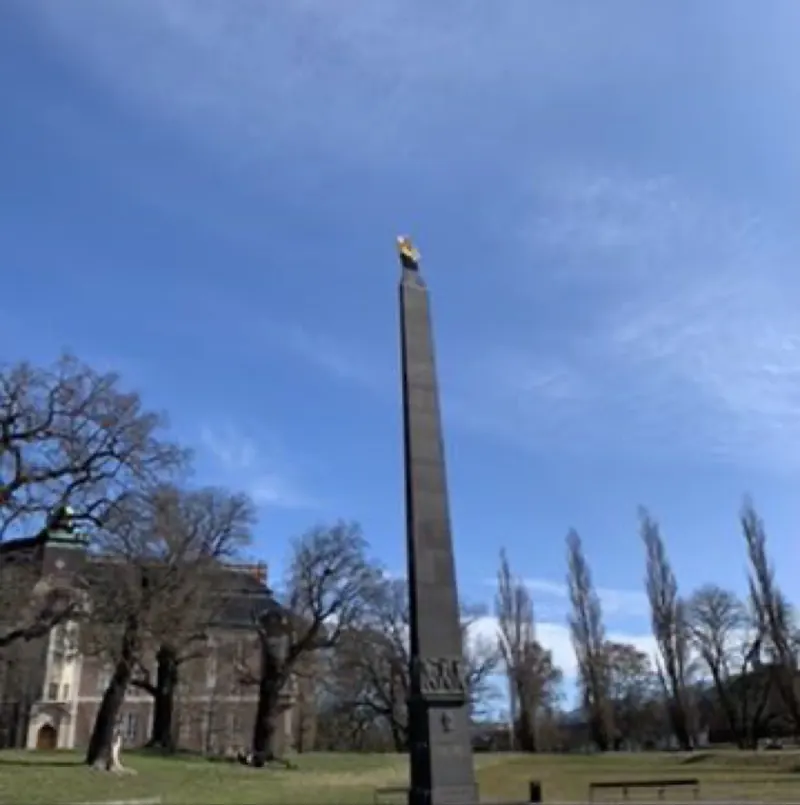 Vegamonumentet
06. Often confused with
Statue. Both are raised in memory of something. But a statue shows a person – the obelisk is pure form. It speaks through its inscription, not through a face.
Sources
- lex.dk (Den Store Danske): "obelisk"
- Vatican City State (vatican.va): "L'obelisco" – St Peter's Square