01. From fortress to residence
The Middle Ages are the age of castles. A castle is a lord's fortified home. He lives here, runs his estate from here and holds out here when the enemy comes.
At its heart is a tower, first of timber, then of stone. Around it a curtain wall, a ditch and a rampart. A drawbridge, a portcullis and arrow slits. In England and France the tower becomes a whole residence – the keep, or donjon. The Tower of London is one.
Scania, 1499. Jens Holgersen Ulfstand starts building Glimmingehus. The walls are a metre thick. The house is 26 metres tall. The only way in is a stone stair to a door one floor up. And the stairwell? A trap for anyone who gets inside.
Then comes gunpowder. From the early 1500s the cannons come knocking, and the medieval castle has had its day. Fortress and home part ways.
Vadstena shows the whole journey. In 1545 Gustav Vasa starts building a fortress on Lake Vättern. It is to protect the realm against the Danes – and against rebellious peasants from Småland. Round cannon towers at four corners, wide moats outside.
But the fortress does not stay a fortress for long. In 1554 work starts on the palace wing, now as a residence for Duke Magnus. John III goes further still. With the architect Arendt de Roy, the fortress becomes a Renaissance palace in the continental manner.
And then? In 1716 the royals move out for good. The castle becomes a granary. In the late 18th century damask is woven inside its walls. In 1997 the ramparts start to rise again, and the two southern corner towers return.
02. How to spot it
- 1.Thick walls and few, small windows – the fortress
- 2.Towers at the corners, often round for cannons
- 3.A moat, rampart or curtain wall around the site
- 4.A drawbridge or a raised entrance
- 5.Symmetry, ornate gables and large windows – the palace
03. The giveaway
The entrance. Is the door high up, narrow and hard to reach? Then the building is made to be defended. Does the castle open up with a wide gateway and large windows onto the courtyard? Then it is made to be seen.
04. Where to see it
- Vadstena Castle, Swedenfortress from 1545, residence from 1554, Renaissance palace under John III
- Glimmingehus, Scaniabuilt 1499 to around 1505
- The Tower of London
05. In the app
1 place of this type in Everyday Grandeur. Tap it to see it on the map.
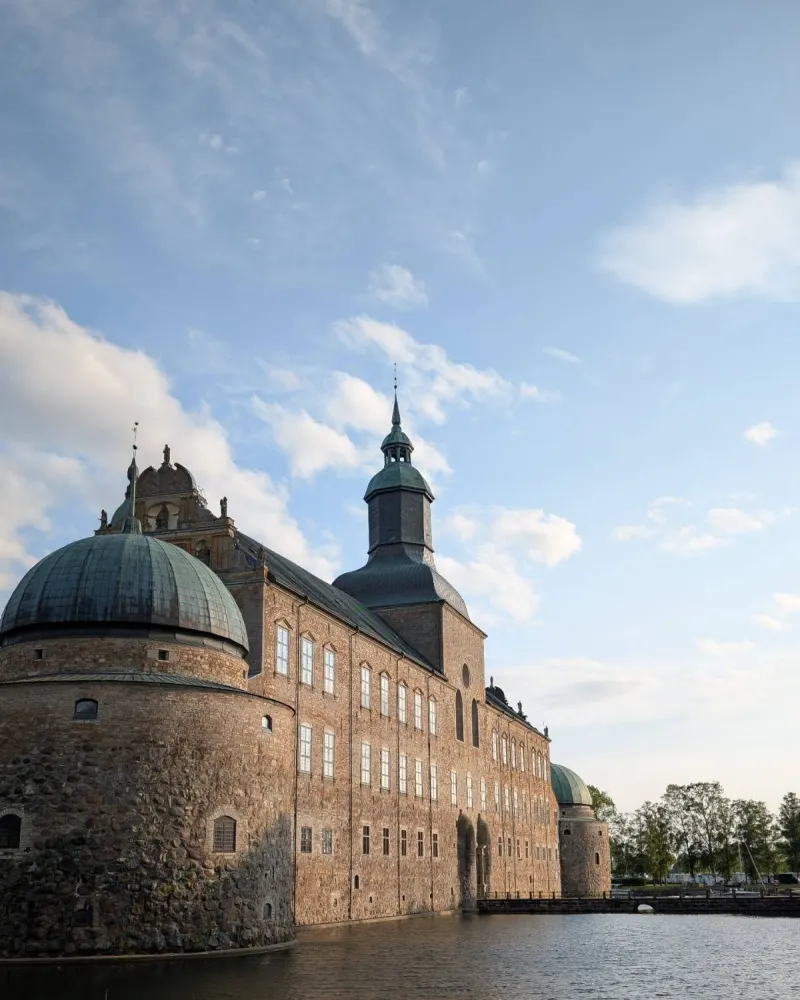 Vadstena Slott
06. Often confused with
Gothic Revival. The 19th century loves castles. Battlements, towers and pointed arches appear on villas and manor houses that never had to defend anything. Check the date.
Renaissance. The Renaissance palace inherits the castle's towers and moats, but turns them into decoration. Look for the symmetry and the ornate gable.
City gate. Also part of a fortification – but it protects a town, not a lord.
Sources
- lex.dk (Den Store Danske): "borg"
- lex.dk (Den Store Danske): "Glimmingehus"
- Statens fastighetsverk (sfv.se): "Vadstena slott"