01. The Middle Ages return
Gothic Revival is born in 18th-century England and becomes the obvious style for churches across much of Europe in the 19th. In Sweden it is introduced by Carl Georg Brunius, and his church in Kristinehamn is seen as its breakthrough.
In the second half of the century the towns grow, and new town churches are built in Gothic Revival, often in exposed brick. Haga Church in Gothenburg by Adolf W. Edelsvärd is finished in 1859, St John's in Stockholm in 1890 and Oscar Fredrik Church in Gothenburg in 1893. Pointed windows, a tall tower with a spire and – inside – a blue chancel ceiling with golden stars.
At the same time medieval churches are "restored", often heavily, to look more Gothic than they ever were. Helgo Zettervall gives Uppsala Cathedral its present spires during the restoration of 1885–1893.
In the 1890s, Gothic moves into apartment blocks too. Red-brick buildings take German Brick Gothic – the "Rohbau" style – as their model, with pointed windows and portals beneath a pointed ornamental gable, a wimperg.
02. How to spot it
- 1.Pointed arches as decoration in windows and portals
- 2.A tall, slender tower with a spire
- 3.Exposed, regular machine brick or render
- 4.Tracery and stained glass
- 5.Portals beneath a wimperg – a pointed ornamental gable – with finials
- 6.Capitals with crockets – knobs on projecting stems
- 7.Inside: a blue chancel ceiling with golden stars
03. The giveaway
Perfection. Medieval walls are uneven and rebuilt in stages – a Gothic Revival church is regular, symmetrical and built in one go.
Read the façade
04. Architects and builders
- Carl Georg Brunius
- Adolf W. Edelsvärd
- Helgo Zettervall
- Axel Herman Hägg
05. Where to see it
- Haga Church, Gothenburg1859
- St John's Church, Stockholm1890
- Oscar Fredrik Church, Gothenburg1893
- All Saints' Church, Lund
- The spires of Uppsala Cathedralrestoration 1885–1893
06. In the app
7 places in this style in Everyday Grandeur, added by the app's users. Tap a place to see it on the map.
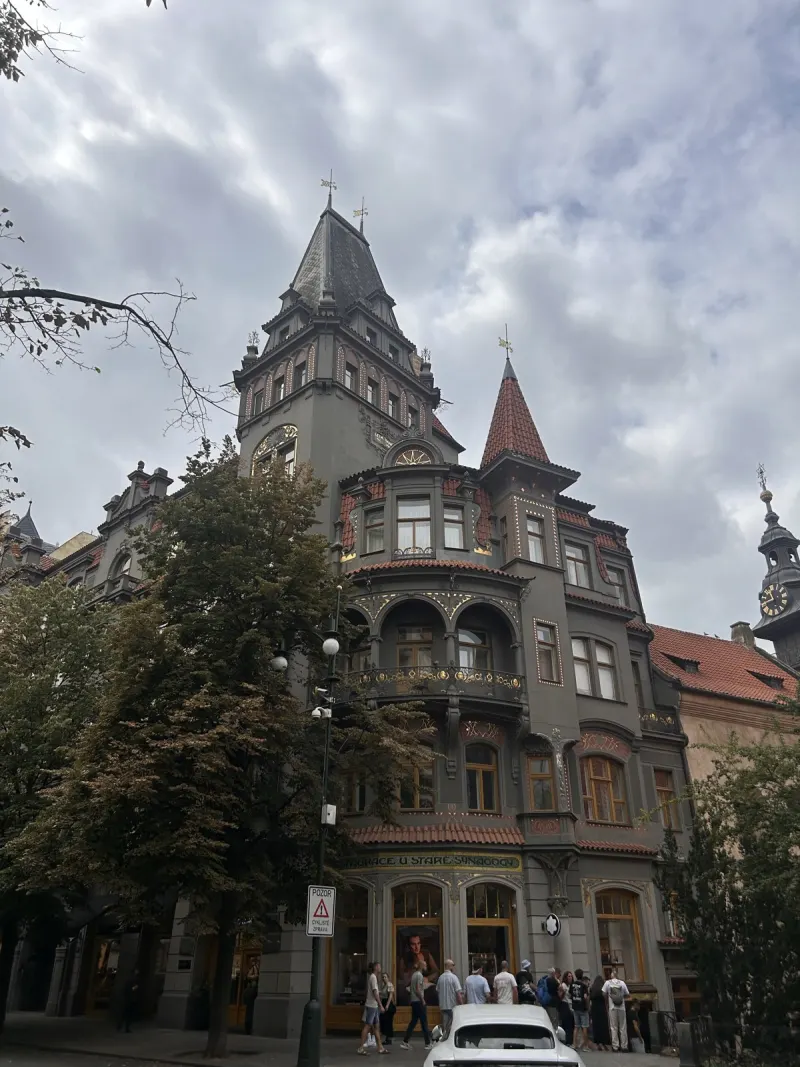 Vysoká synagogaPraha 1 · 1883 · J. M. WertmüllerPhoto: @Pontus
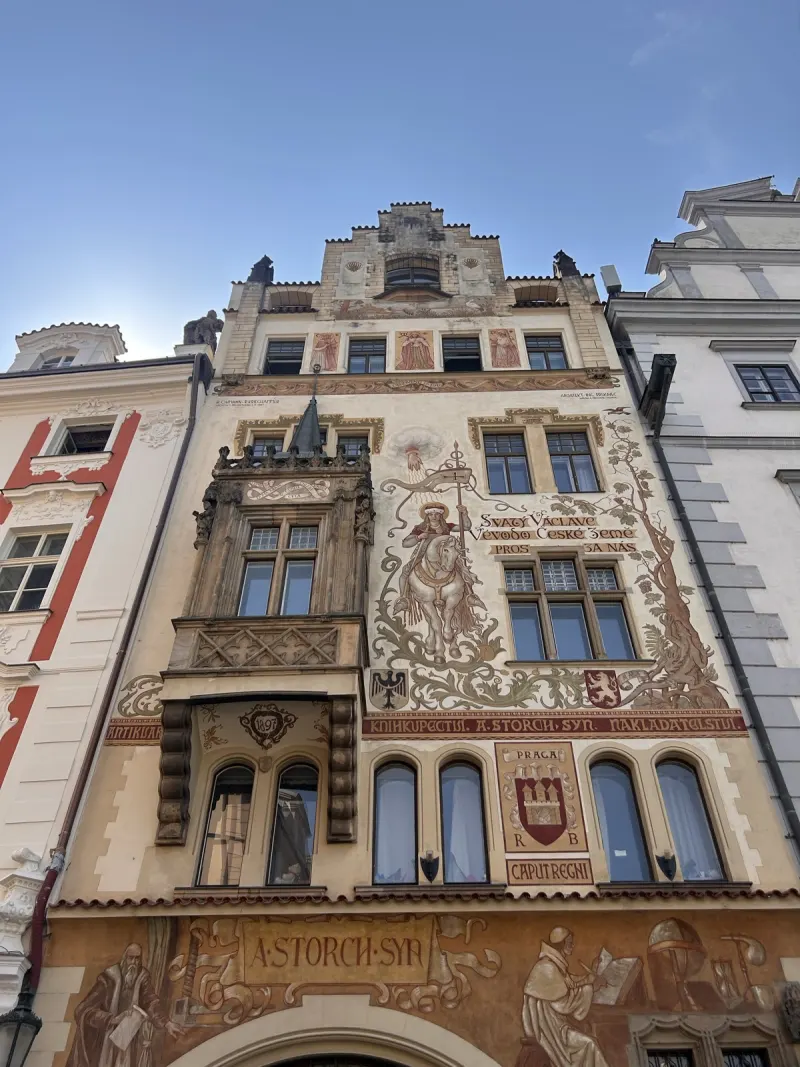 The house at the Stone Virgin MaryPraha 1 · 1896Photo: @Pontus
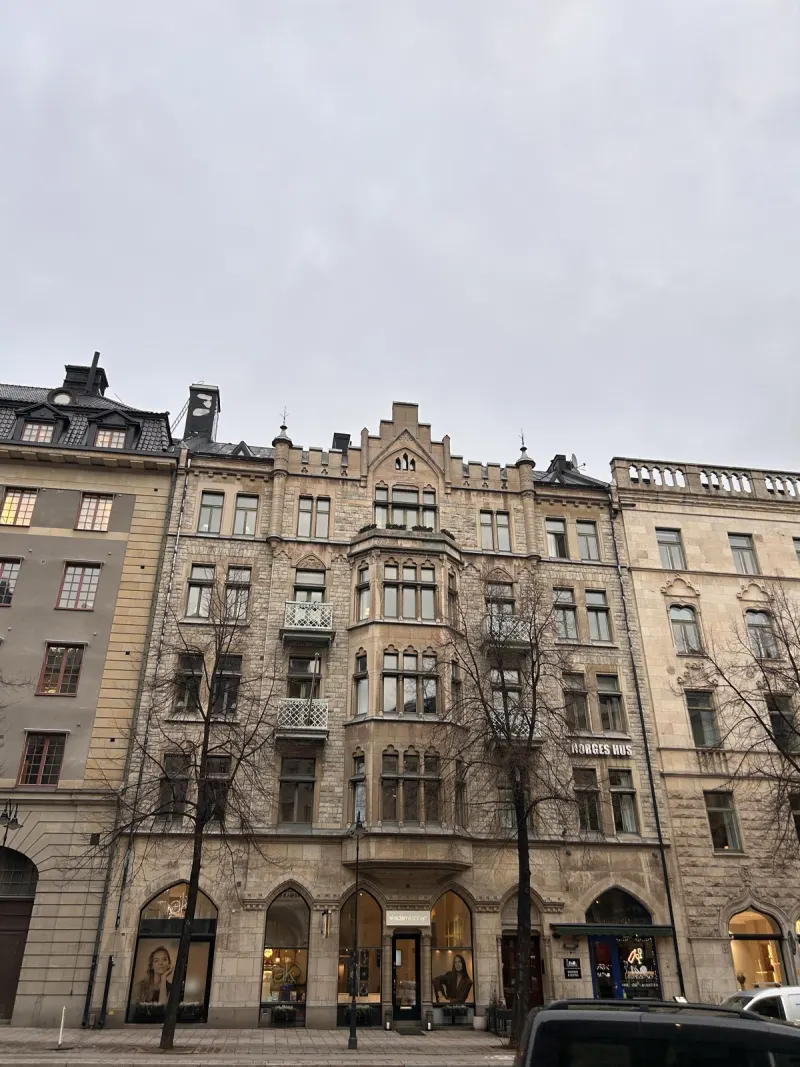 Birger Jarlsgatan 26Stockholm · 1899 · Erik BoströmPhoto: @Pontus
- Old St Pauls Wellington · 1865Added by: @Hanoian
- Christ Church PachmarhiPachmarhi · 1875Added by: @PrussianPerson
- Stadthaus ZürichZürich · 1883 · Gottfried Semper, Gustav GullAdded by: @PrussianPerson
- Parliamentary Library of New ZealandWellington · 1901Added by: @Hanoian
07. Often confused with
Gothic. Genuine medieval Gothic has uneven, handmade brick or fieldstone and has usually been rebuilt several times.
Sources
- Svenska kyrkan, Folkungabygdens församling: "Stilar och epoker"
- Olle Svedberg: Arkitekternas århundrade – Europas arkitektur 1800-talet (Arkitektur förlag, 2001)
- Cecilia Björk & Laila Reppen: Tidstypiskt – arkitekturdetaljer i flerbostadshus 1880–1980 (Svensk byggtjänst, 2016)
- Swedish Wikipedia: "Nygotik", "Uppsala domkyrka"