01. The pointed arch takes over
Gothic is born in France in the 12th century and reaches Sweden in the 13th. The secret is the pointed arch and the rib vault. With them the weight can be led down into piers and buttresses instead of resting on thick walls – and the walls can be opened up for large windows.
The great projects are the cathedrals. Uppsala Cathedral is begun around 1272–73 on a French model and not consecrated until 1435 – the largest church in the Nordic countries. To this day, medieval iron tie-rods hold parts of its structure together: the silent partner behind the façade. Linköping Cathedral takes almost three centuries to build. And in Vadstena, the Bridgettines raise their abbey church in limestone from 1369 to 1430, its faint blue shimmer earning it the nickname the Blue Church.
Out in the parishes, older churches are rebuilt. Chancels are widened, vaults are put in and walls are covered in paintings. Where brick is scarce they build in limestone or fieldstone; in the Mälaren valley and Skåne brick becomes ever more common – see Brick Gothic.
02. How to spot it
- 1.Pointed arches in windows, portals and vaults
- 2.Rib and star vaults over the nave
- 3.Buttresses on the outside of the walls
- 4.Larger windows, often with tracery in the upper part
- 5.A wider chancel than in Romanesque churches
- 6.Painted and carved figures stand more freely, with deep folds in their robes
03. The giveaway
The buttresses. If heavy piers prop the church up from outside, the walls are not carrying the vault alone – a sure Gothic sign.
Read the façade
- Tracery in the round window
- Pointed arches
- The pointed gable
04. Where to see it
- Uppsala Cathedralbegun in the 1270s, consecrated 1435
- Vadstena Abbey Churchlimestone, 1369–1430
- Linköping Cathedral
- The churches of Gotland and the church ruins of Visby
05. In the app
7 places in this style in Everyday Grandeur, added by the app's users. Tap a place to see it on the map.
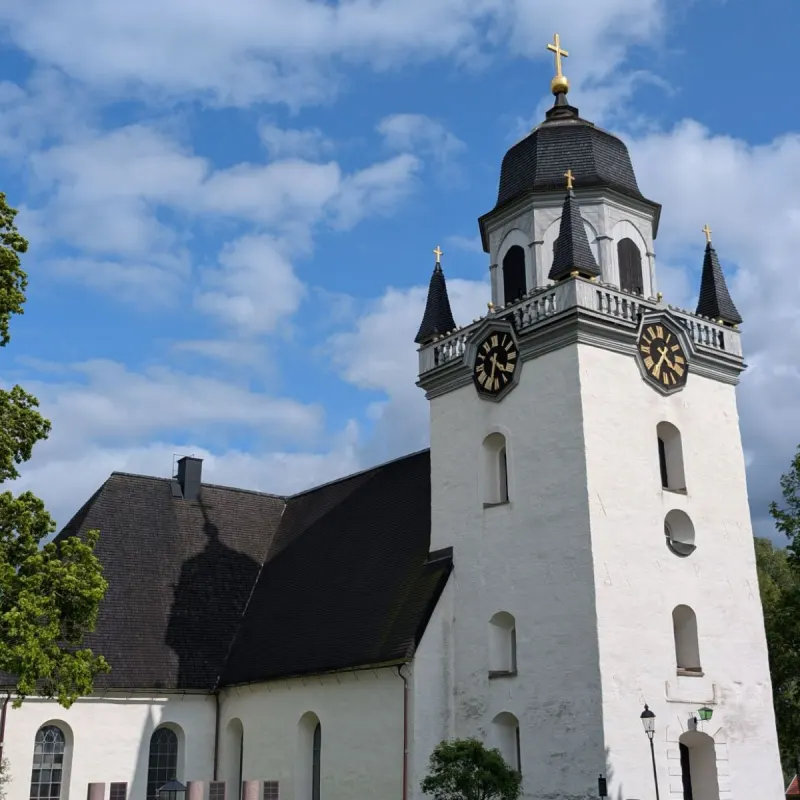 Säby KyrkaTranås · 1100Photo: @Pontus
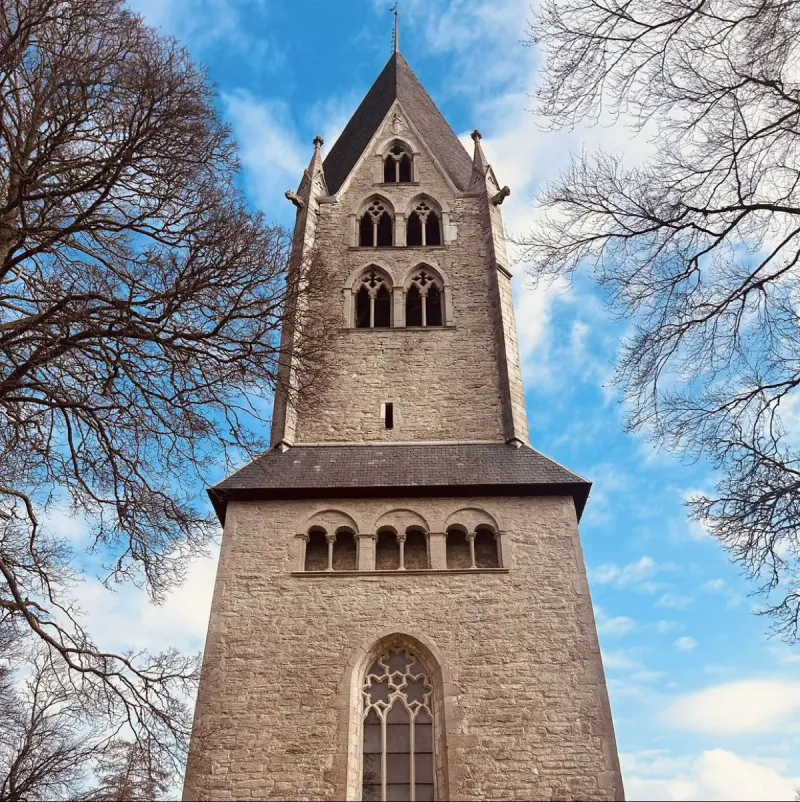 Dalhem KyrkaDalhem · 1200Photo: @Pontus
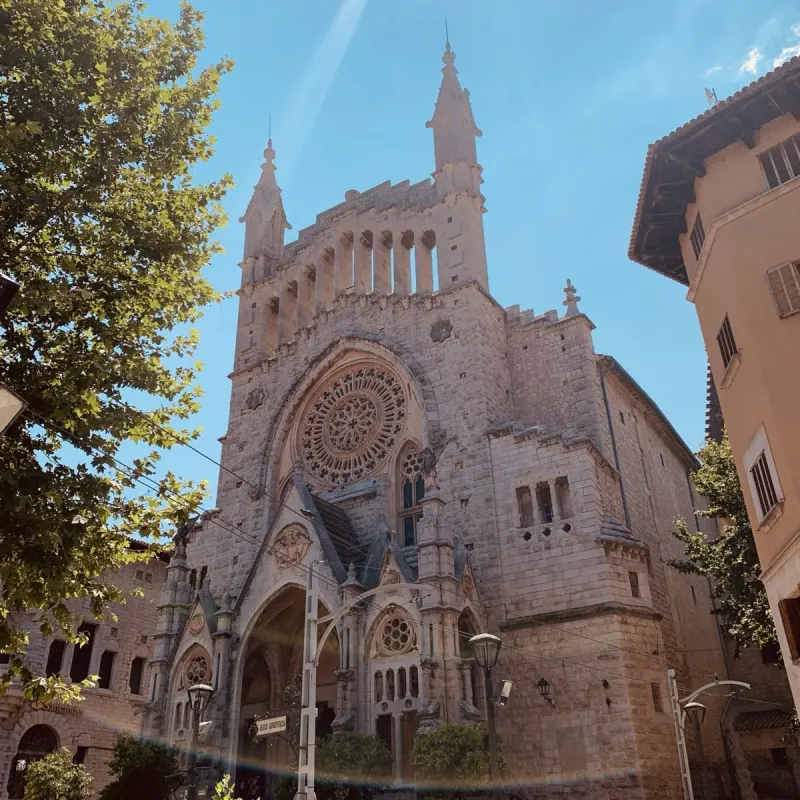 Església de Sant BartomeuSóller · 1200 · Joan RubióPhoto: @Pontus
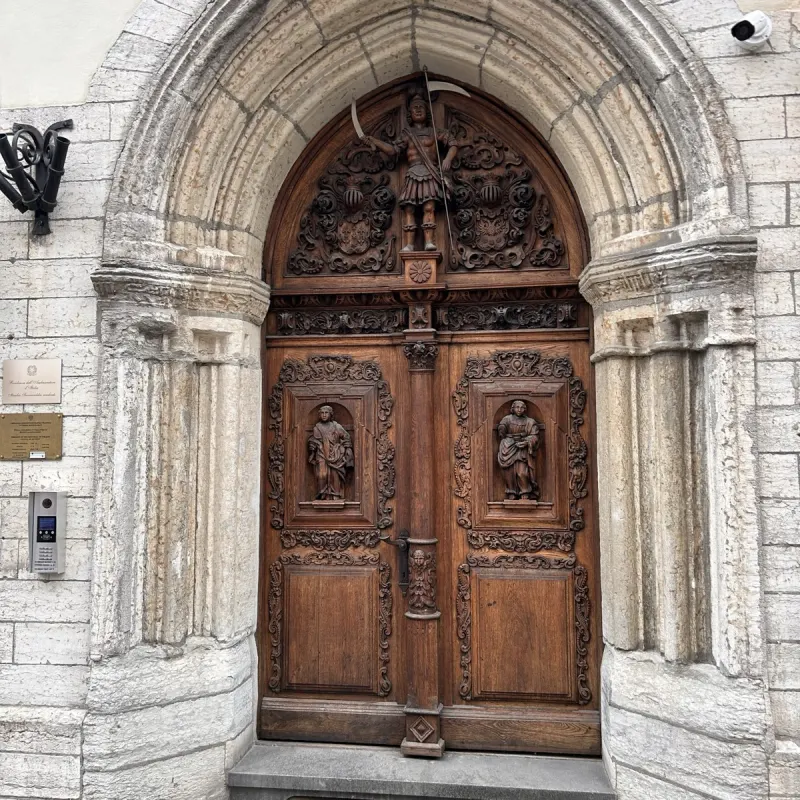 Suur-Karja Street 1Tallinn · 1300Photo: @Pontus
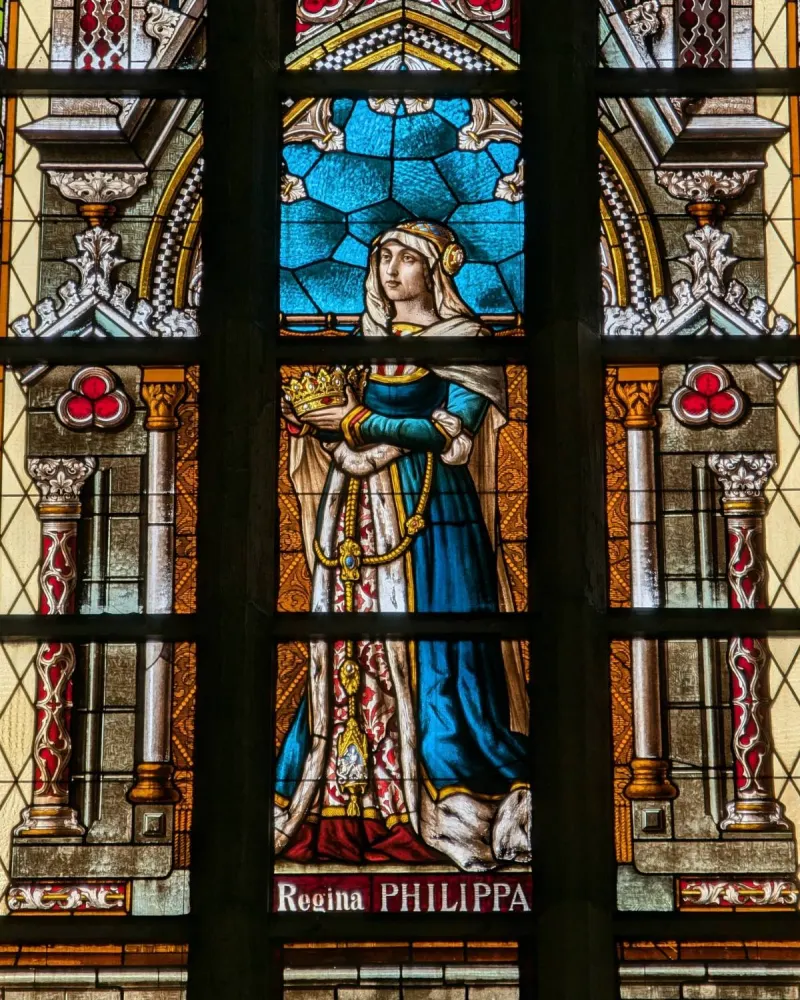 Vadstena Klosterkyrka1430Photo: @Bovin
- KapellbrückeLuzern · 1333Added by: @PrussianPerson
- Iglesia de Santa María de la Asunción Gumiel de Izán · 1627 · Bartolomé de HerreraAdded by: @aleserre
06. Often confused with
Gothic Revival. The 19th-century copy. Gothic Revival churches are usually built in machine-made brick with perfectly regular details, often with a tall, slender spire. If the church was built after 1840, it is Gothic Revival.
Sources
- Svenska kyrkan, Folkungabygdens församling: "Stilar och epoker"
- Pontus Bovin: Bakom fasaden – ankarslutens gömda konstruktion och syfte (Uppsala universitet, Campus Gotland, 2024), med Bo Molander: Järn i gamla byggnader (1985)
- Swedish Wikipedia: "Gotik", "Uppsala domkyrka", "Vadstena klosterkyrka"