
01. A style for every building
The 19th century has no style of its own. Instead, architects choose among the styles of the past, depending on what a building is meant to say. The umbrella term is Historicism – and for the architecture of the 1890s, "nystilar", the revival styles, becomes the name in Swedish.
The choice follows a logic. Churches are built in Gothic Revival, associated with medieval piety. Museums, banks and apartment blocks get Neo-Renaissance, signalling learning and bourgeois prosperity. Theatres and parliaments dress in Neo-Baroque, while salons and cafés are fitted out in Neo-Rococo. Churches might also be Romanesque Revival, with round arches and twin towers.
Then come the 1890s, and a new era arrives in earnest. The boom turns Stockholm into a European city: straight, tree-lined esplanades, bank palaces in natural stone and corner buildings with towers visible from afar. The building regulations of 1874 tie the height of buildings to the width of the street, and architects such as Isak Gustaf Clason, Erik Josephson, Ludvig Peterson and Johan Laurentz design block after block. Electricity reaches the stairwells – Stockholm's first power station opens in 1892 – and by the end of the decade the first lifts are installed in the finer buildings.
At the same time, attitudes to architecture turn. The rendered, strictly symmetrical façades of the 1880s are now seen as false and overloaded. Materials should be honest and suit the Swedish climate: natural stone, red brick, and render that is allowed to be render. Gothic, Renaissance and Baroque are mixed freely, but every building should be unique. The façade breaks up – windows are grouped by the rooms behind them, the entrance moves off-centre, and for the first time architects care as much about the plan as about the façade.
The pathbreaker stands on Strandvägen. Isak Gustaf Clason's Bünsow House from the late 1880s takes its inspiration from the 16th-century châteaux of the Loire – and breaks the mould. Windows are grouped by the rooms behind them. Towers and gables create a lively roofscape. Brick and stone are allowed to show.
Then architects look west. The 1893 World's Fair in Chicago and H. H. Richardson's mighty stone walls beckon, and Ferdinand Boberg brings the impressions home: the fire station in Gävle, and Stockholm's power station – where the portal is framed by a frieze of carved light bulbs. That same year, 1893, Carl Westman condemns all revival architecture in Dagens Nyheter as a masquerade in borrowed clothes. The critique takes root. It will become National Romanticism.
These buildings become the backbone of the stone towns that grow with industrialisation. Around 1900, Art Nouveau and National Romanticism turn against it all – in search of forms of their own.
02. How to spot it
- 1.Asymmetrical façades with windows grouped by the rooms behind them
- 2.A lively roofline: round corner towers with domes and spires, turrets and gable dormers breaking the eaves
- 3.Red facing brick against pale stone – quoins, window surrounds and arches with an emphasised keystone
- 4.The façade divided in three by horizontal mouldings: base, a rich middle and a simpler top floor
- 5.A base one or two storeys high in sandstone, limestone or rusticated render
- 6.A round-arch frieze under the eaves, patterned brickwork in several colours and moulded brick
- 7.Black-painted wall anchors and wrought-iron balconies at chosen points
- 8.Tall two-storey portals with double doors of varnished wood – in Gothic, Renaissance or Baroque dress
03. The giveaway
The window and the date. The typical 1890s window has two tall panes below a fixed transom and a single horizontal pane above. And look for the year on the façade – it marks when the building was finished; the planning drawings are usually two years older.
Read the façade
- An asymmetric skyline
- A tower with a spire
- A domed tower roof
- Round-arched windows
04. Architects and builders
- Fredrik Wilhelm Scholander
- Johan Fredrik Åbom
- Helgo Zettervall
- Isak Gustaf Clason
- Erik Josephson
- Ludvig Peterson
- Johan Laurentz
- Axel Anderberg
05. Where to see it
- Nationalmuseum, StockholmNeo-Renaissance, opened 1866
- Haga Church, GothenburgGothic Revival, 1859
- The Royal Opera, StockholmNeo-Baroque, opened 1898
- The Stone Town, Sundsvallrebuilt after the fire of 1888
- Lower Östermalm, Stockholm1890s apartment blocks in brick, stone and render
- The Bünsow House, Strandvägen, StockholmIsak Gustaf Clason, late 1880s
- Rosenbad, StockholmFerdinand Boberg
06. In the app
7 places in this style in Everyday Grandeur, added by the app's users. Tap a place to see it on the map.
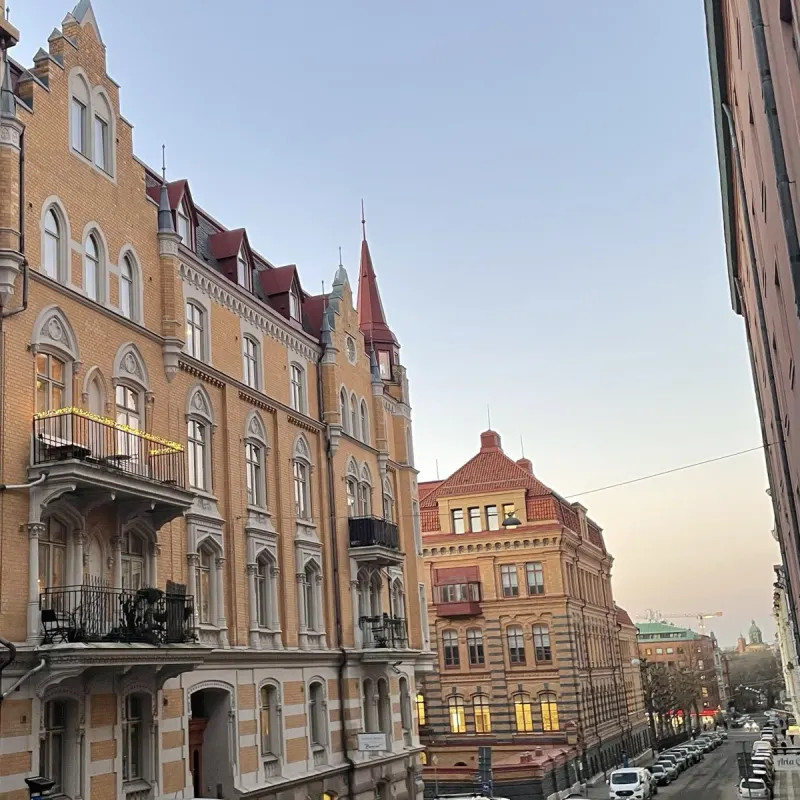 Engelbrektsgatan 13Göteborg · 1891Photo: @Pontus
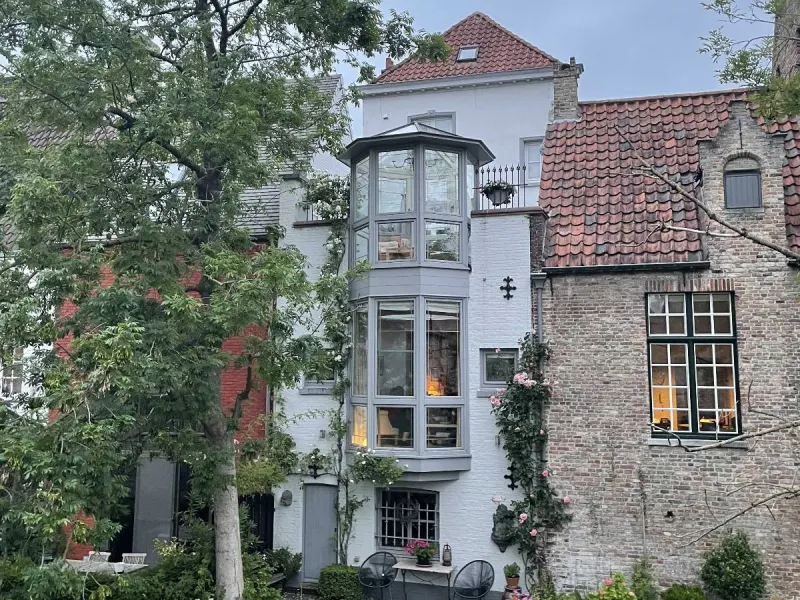 Pottenmakersstraat 23Brugge · 1897Photo: @Pontus
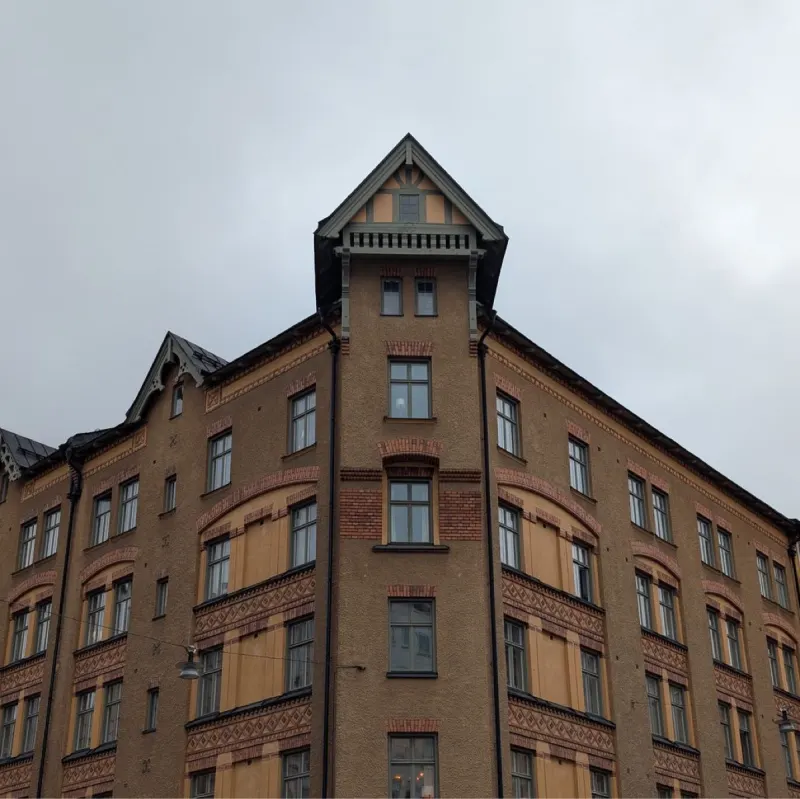 Kungsholmsgatan 44-54Stockholm · 1899 · Folke ZettervallPhoto: @Pontus
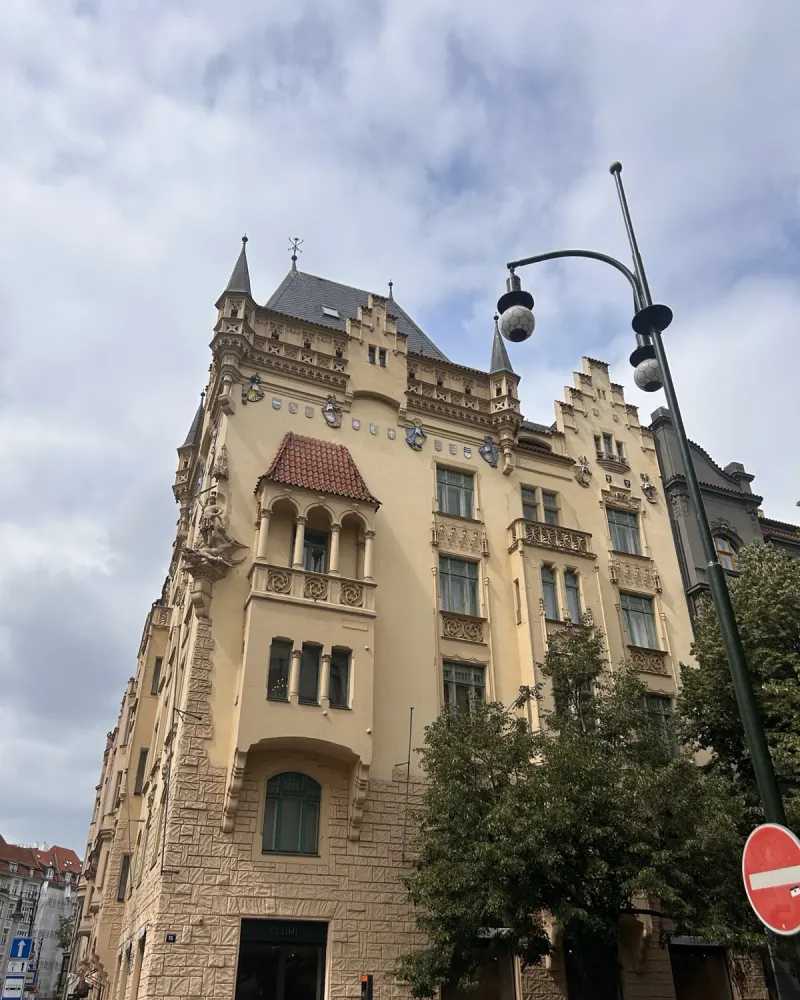 Dům U svantého JiríPrague 1 · 1906 · Jirí JustichPhoto: @Pontus
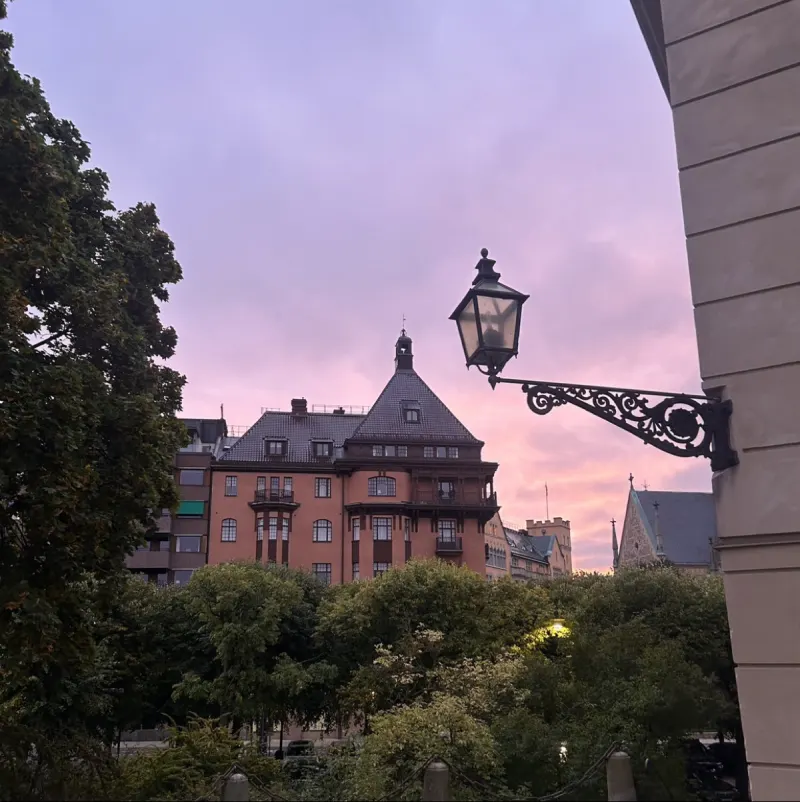 Narvavägen 8Stockholm · 1906 · Hagström & EkmanPhoto: @Pontus
- Pasaje Gutiérrez Valladolid · 1886 · Jerónimo Ortiz de UrbinaAdded by: @aleserre
- Storgatan 35Göteborg · 1899Added by: @Pontus
07. Often confused with
The original styles. A "Renaissance" or "Gothic" building from after 1840 is a revival. Check the date – and look for details too perfect to be handmade. Neo-Renaissance. The Neo-Renaissance of the 1880s is usually rendered and strictly symmetrical; the revival styles of the 1890s are asymmetrical and show off their brick and stone.
Sources
- Cecilia Björk & Laila Reppen: Tidstypiskt – arkitekturdetaljer i flerbostadshus 1880–1980 (Svensk byggtjänst, 2016)
- Svenska kyrkan, Folkungabygdens församling: "Stilar och epoker"
- Olle Svedberg: Arkitekternas århundrade – Europas arkitektur 1800-talet (Arkitektur förlag, 2001)
- lex.dk (Den Store Danske): "Sverige – arkitektur – 1850 til i dag"
- Pontus Bovin: Bakom fasaden – ankarslutens gömda konstruktion och syfte (Uppsala universitet, Campus Gotland, 2024), med Bo Molander: Järn i gamla byggnader (1985)
- Swedish Wikipedia: "Nyrenässans", "Nygotik", "Kungliga Operan"
- Eva Eriksson: "Arkitekturen i Stockholm kring sekelskiftet 1900 – form, idéer och influenser", i Heikki Ranta (red.): Internationellt, nationellt, lokalt (Länsstyrelsen Gotlands län, 2005)