01. Nature takes over the façade
Jugend, as Art Nouveau is called in Sweden after the German magazine Jugend, is an international revolt against Historicism. Instead of borrowing ornament from the Renaissance and Baroque, architects take their forms from nature: tendrils, flowers, water.
In Sweden the style flourishes roughly 1896–1914. The breakthrough comes with the General Art and Industrial Exhibition at Djurgården in 1897, with Ferdinand Boberg as chief architect. From there the style spreads quickly across the country, and the exhibitions in Norrköping in 1906 and Malmö in 1914 carry it further. Malmö becomes an Art Nouveau city in its own right, with architects such as Oscar Hägg and Axel Anderberg, whose St John's Church is built in 1903–1907.
The models are in Vienna and Paris. In Austria Art Nouveau turns strict – straight lines and geometric figures. In France the doorways overflow with flowing lines. Leading Swedish architects find much of it vulgar. So Sweden makes a version of its own. Measured. Restrained. With smooth, softly curved rendered surfaces.
The ornament is painted in the façade's own colour. That is a clear break with the 1890s, when stone and brick were meant to contrast. The motifs come from Swedish nature – pine cones, oak leaves, pine twigs and sunflowers. Look closely by the door: there is often a frog, a turtle or a dragonfly, made of cast stone.
Stockholm is in the middle of a transformation. The streets are paved and electric trams replace the horses. Criticism of the dense, unhealthy stone town of the 1800s is massive – yet the builders keep filling the blocks of the grid. But the façades are new. In northern Vasastan, in Birkastan and along Hornsgatan, whole blocks of Art Nouveau rise, many of them drawn by the firms Dorph & Höög and Hagström & Ekman.
The street decides how grand the building becomes. Along the main streets stand tall buildings with shops on the ground floor, corner bay windows and rich decoration. In the working-class districts they build "arbetarjugend" – workers' Art Nouveau – with small flats, plain render and a few scored lines as the only ornament. Even so, every building gets its own shape and its own colours.
Behind the façade, life becomes more comfortable. Electricity becomes common. From the middle of the decade the water closet replaces the dry privy, and central heating with radiators gains ground. And in 1907 a new planning act arrives: now the city can set building height, depth and eaves height in detail – and demand that even the courtyard façades look decent.
In Stockholm there is the Royal Dramatic Theatre (Fredrik Lilljekvist, 1901–1908) and Ferdinand Boberg's buildings – among them the Thiel Gallery and the Central Post Office. In Gothenburg even the landshövdingehus get Art Nouveau dress: the houses grow deeper, and doors, bay windows and balconies are placed freely and asymmetrically across the façade.
But the truly wild Art Nouveau of the Continent? It is rare in Sweden. The Royal Dramatic Theatre is a restrained Viennese Jugendstil, and Wilhelm Klemming's Centralbadet would rather let greenery and garden take the stage. The exception is Carl Bergsten. After a study trip to Vienna in 1904 he designs the Norrköping Exhibition of 1906 – white, black and dark blue, with a parabolic dome over the industrial hall. Ragnar Östberg calls it "skeleton architecture", and means it as praise. Three years later Bergsten's Hjorthagen Church is completed in Stockholm.
In Sweden, Art Nouveau and National Romanticism often blend – many buildings carry traits of both.
02. How to spot it
- 1.Soft, flowing lines and asymmetry
- 2.Ornament of plants, flowers and tendrils – painted in the façade's own colour
- 3.Bay windows on almost every building, often finished with a curved rise at the eaves
- 4.Tall windows: whole panes below and small panes with glazing bars above the transom
- 5.Smooth render in warm colours – yellow, pinkish yellow, greyish white – with scored lines and bright green tiles
- 6.A ground floor of rough- or smooth-dressed limestone or sandstone
- 7.Large roofs of standing-seam sheet metal, often steeper towards the street
- 8.Doorways with a round arch, a shouldered arch or free baroque forms – plant ornament in stone or cast stone, varnished double doors and a small oval window above
- 9.Black wrought-iron balconies with a stylised bouquet in the middle
03. The giveaway
The window and the placement. Whole, tall panes below and small panes with glazing bars above the transom – the bars are pure decoration. If the door also sits in one corner and the bay window looks a little "out of place", the architect has let go of symmetry. Then it is Art Nouveau.
Read the façade
- The keystone
- Glazing bars that radiate out
- Plant tendrils
04. Architects and builders
- Ferdinand Boberg
- Fredrik Lilljekvist
- Axel Anderberg
- Oscar Hägg
- Carl Bergsten
- Dorph & Höög
- Hagström & Ekman
05. Where to see it
- The Royal Dramatic Theatre, Stockholm1901–1908
- St John's Church, Malmö1903–1907
- The Thiel Gallery, Djurgården, StockholmFerdinand Boberg
- Centralpalatset, Örebro1912–1913
- Centralbadet, StockholmWilhelm Klemming
- Hjorthagen Church, StockholmCarl Bergsten, 1909
- Birkastan and northern Vasastan, Stockholmwhole blocks of Art Nouveau
- Hornsgatan, StockholmArt Nouveau façades side by side
06. In the app
13 places in this style in Everyday Grandeur, added by the app's users. Tap a place to see it on the map.
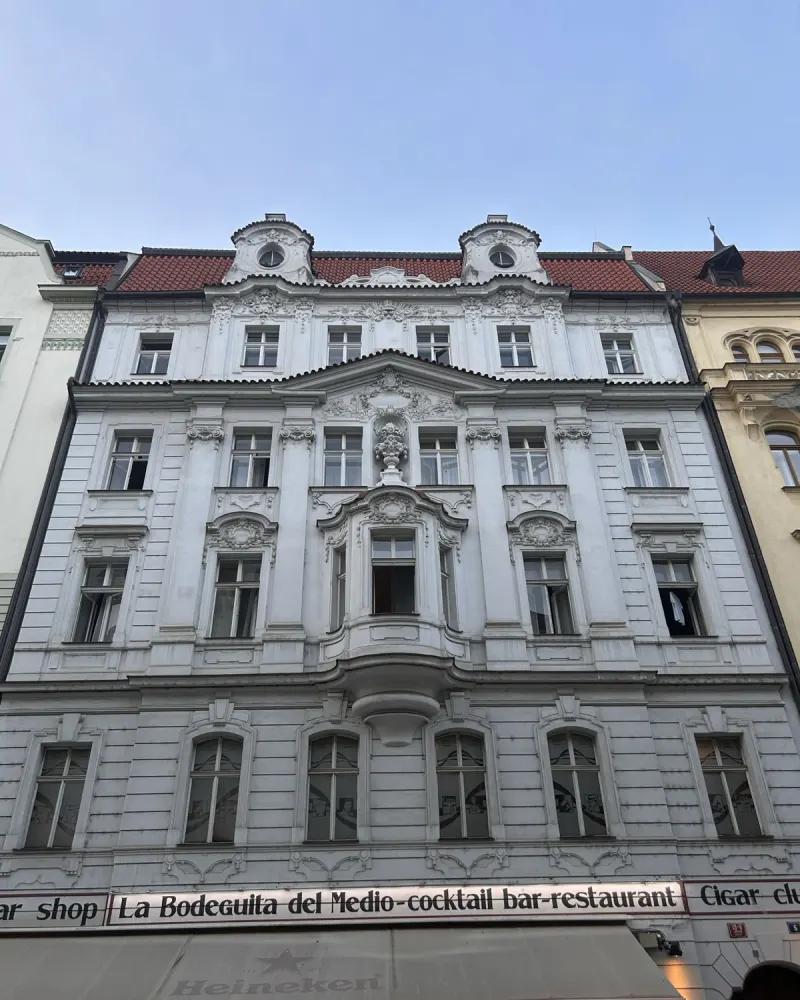 Kaprova 19/5Prague 1 · 1901 · Jirí StibralPhoto: @Pontus
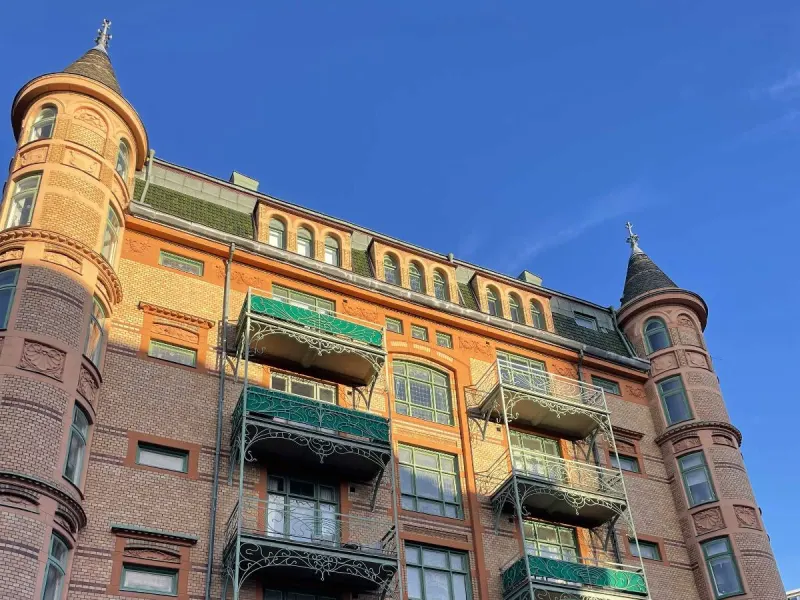 Föreningsgatan 2Göteborg · 1902 · Louis EndersPhoto: @Pontus
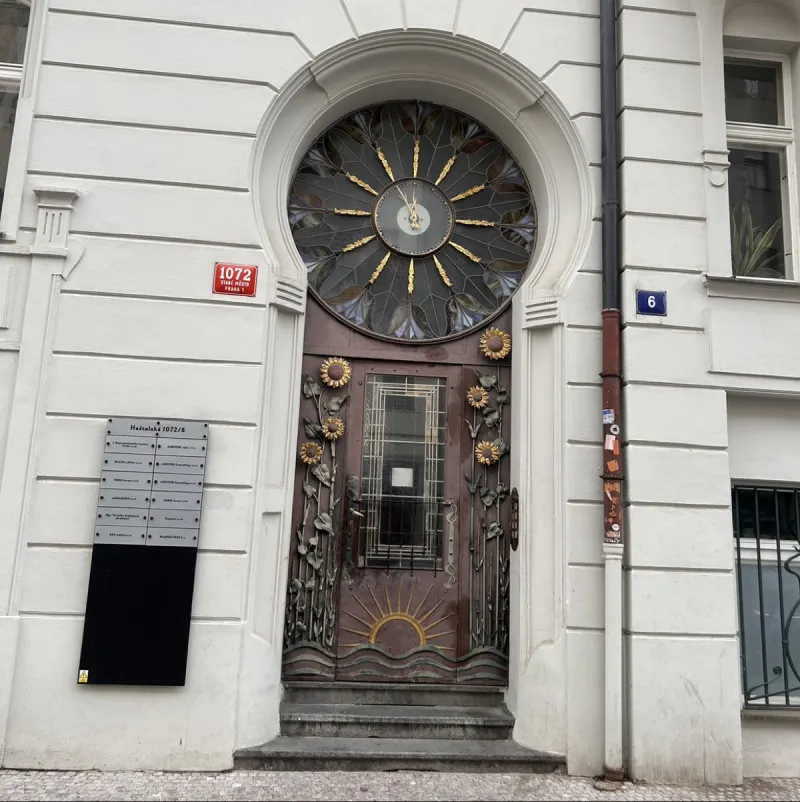 Haštalská 1072/6Praha 1 · 1902 · Osvald PolívkaPhoto: @Pontus
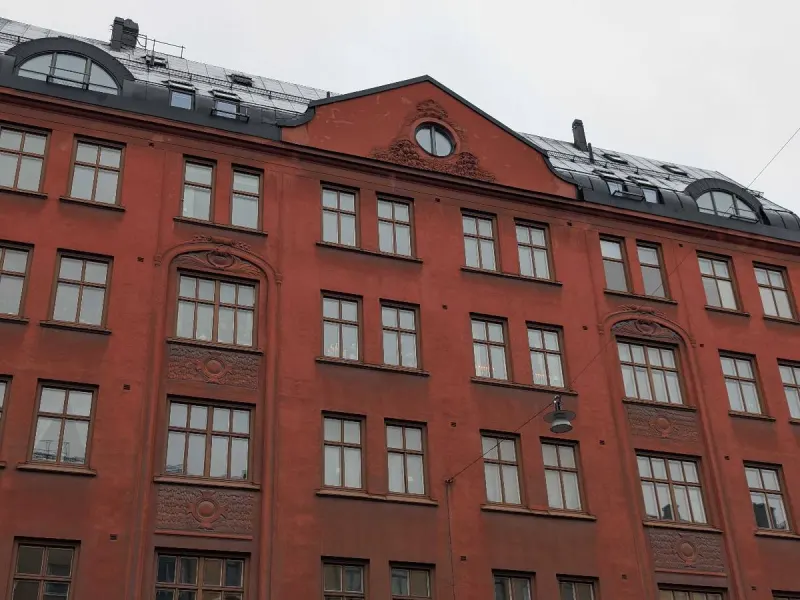 Fleminggatan 95Stockholm · 1904 · Gustaf Virtuos DetthoffPhoto: @Pontus
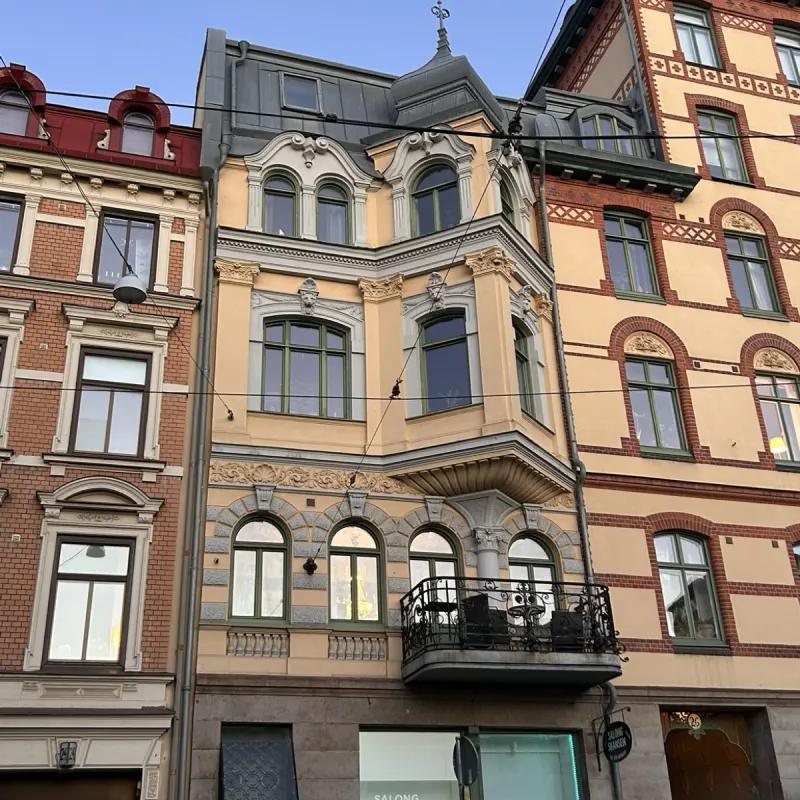 Haga Kyrkogata 25Göteborg · 1904Photo: @Pontus
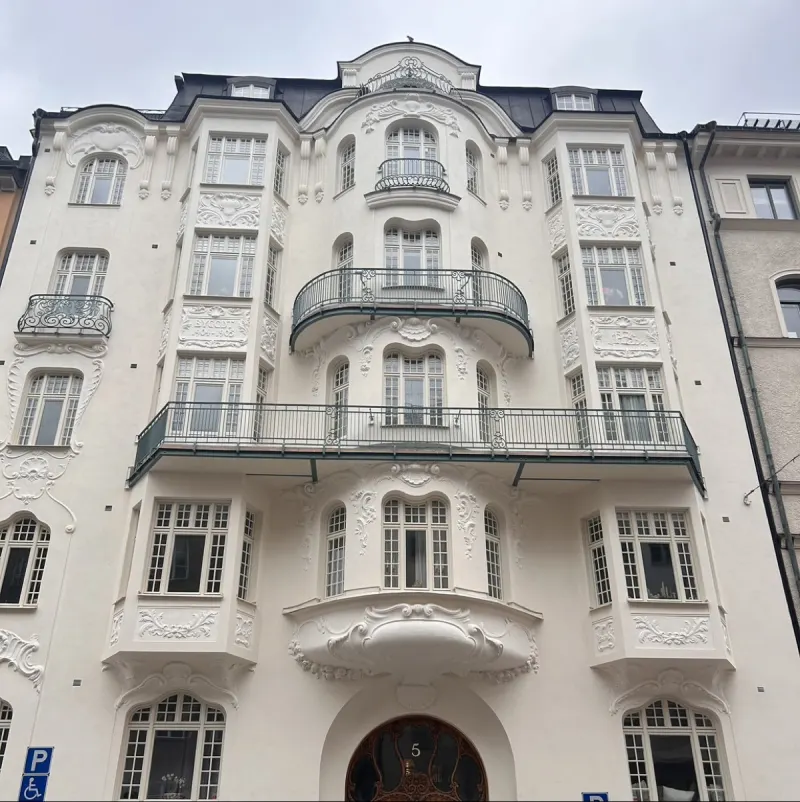 Fredrikshovsgatan 5Stockholm · 1905 · Hagström & EkmanPhoto: @Pontus
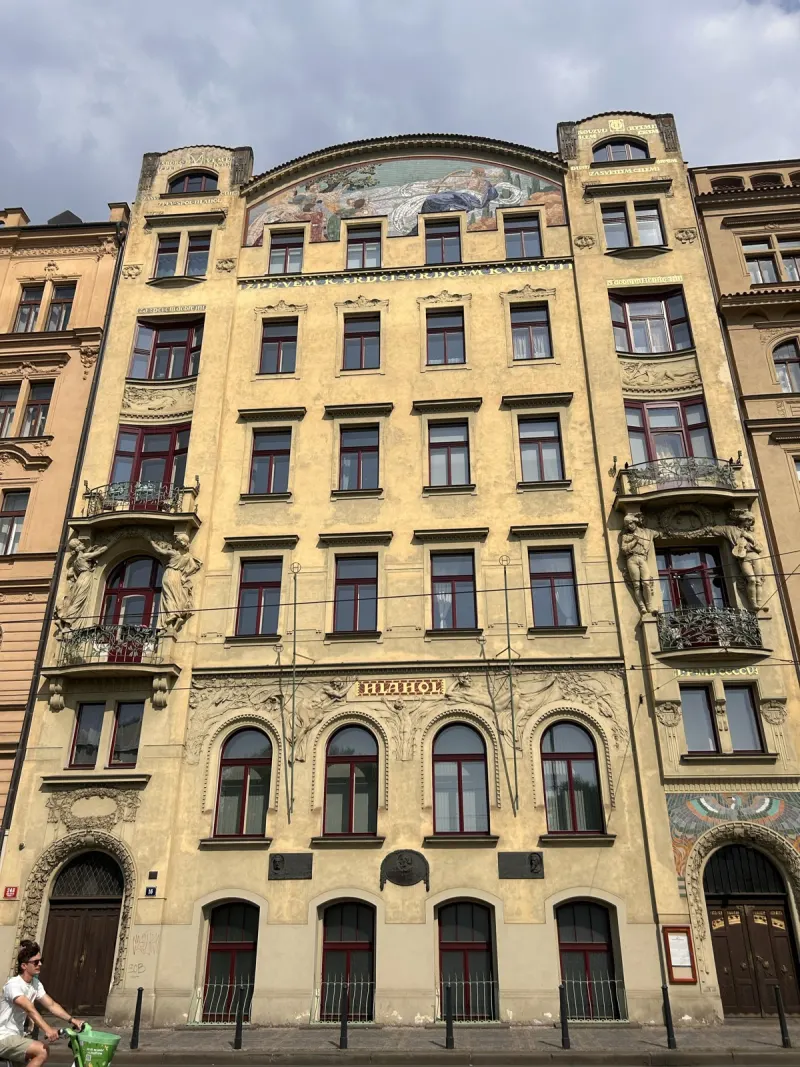 Hlahol buildingPraha 1 · 1905Photo: @Pontus
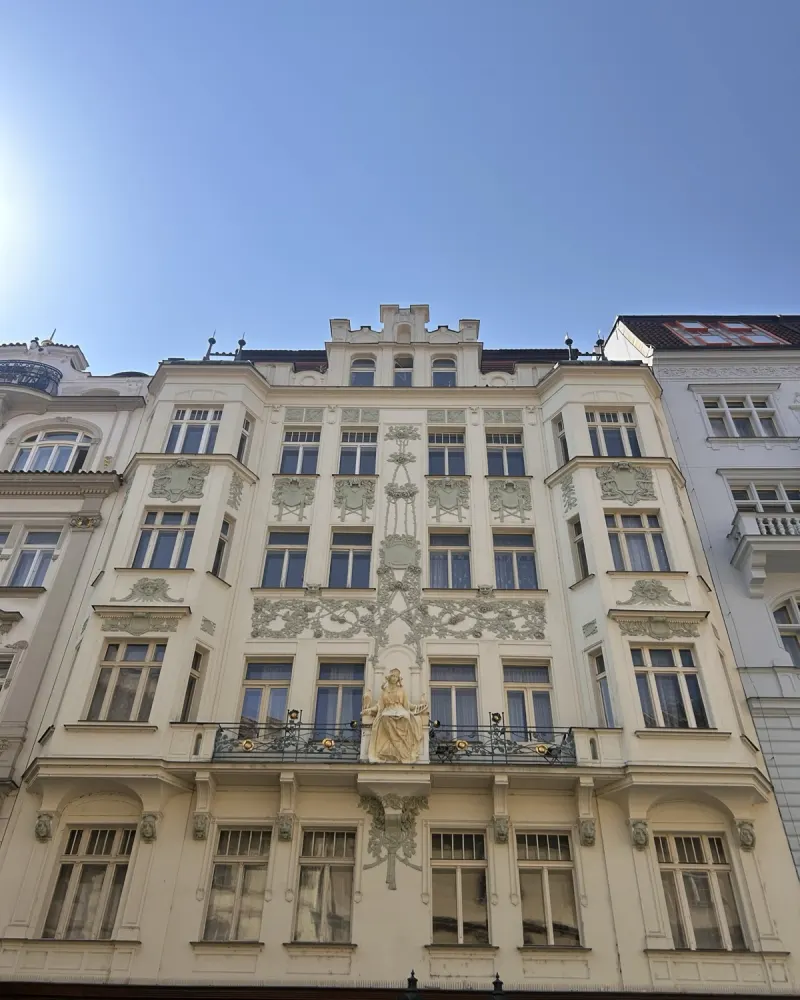 Karlova 178/22Prague 1 · 1905 · Osvald PolívkaPhoto: @Pontus
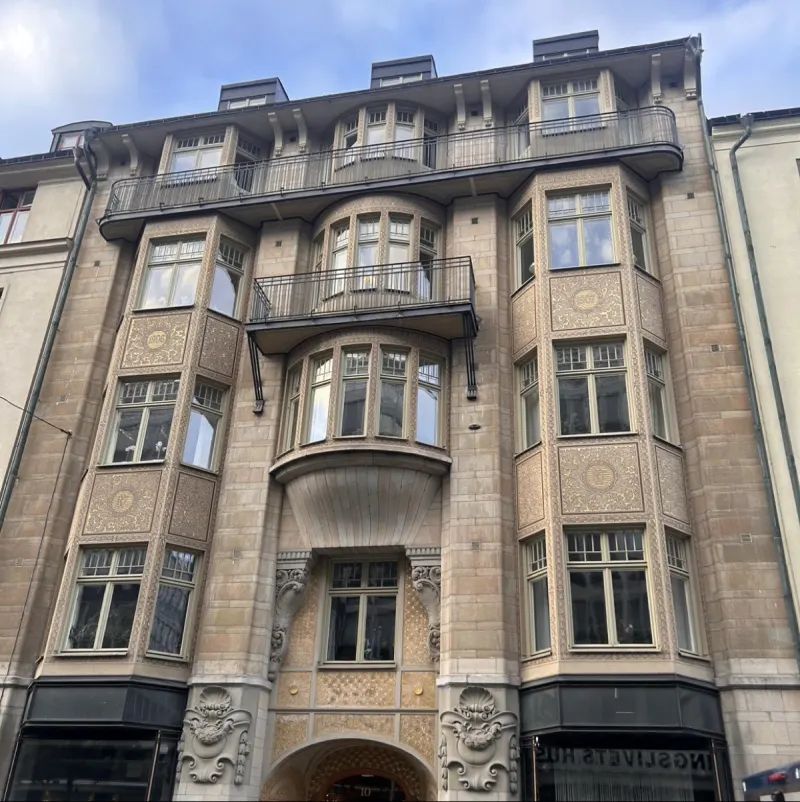 Storgatan 10Stockholm · 1906 · Hagström & EkmanPhoto: @Pontus
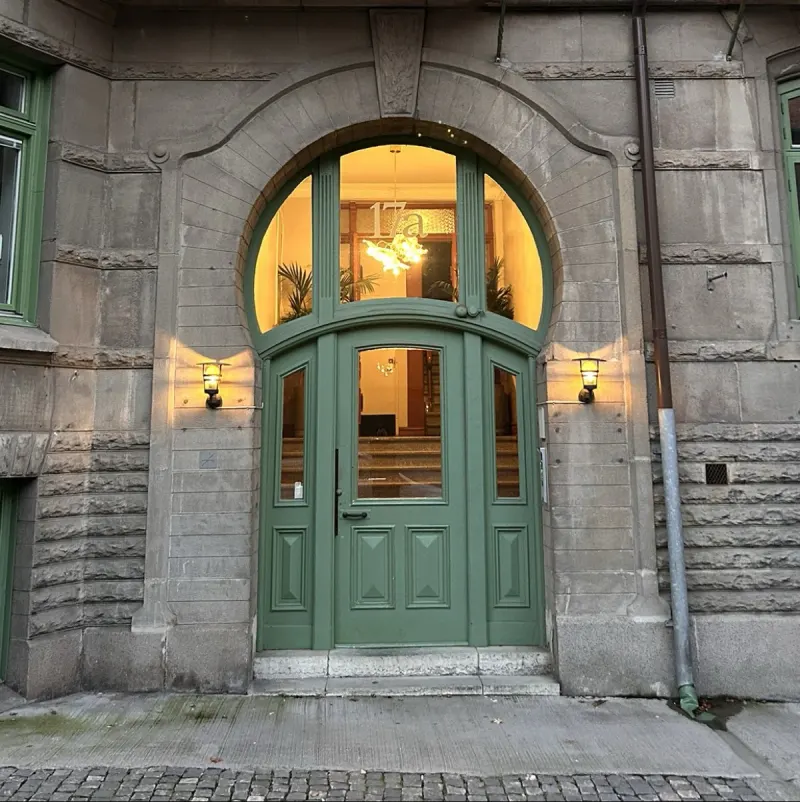 Chalmersgatan 17Göteborg · 1907 · Carl FahlströmPhoto: @Pontus
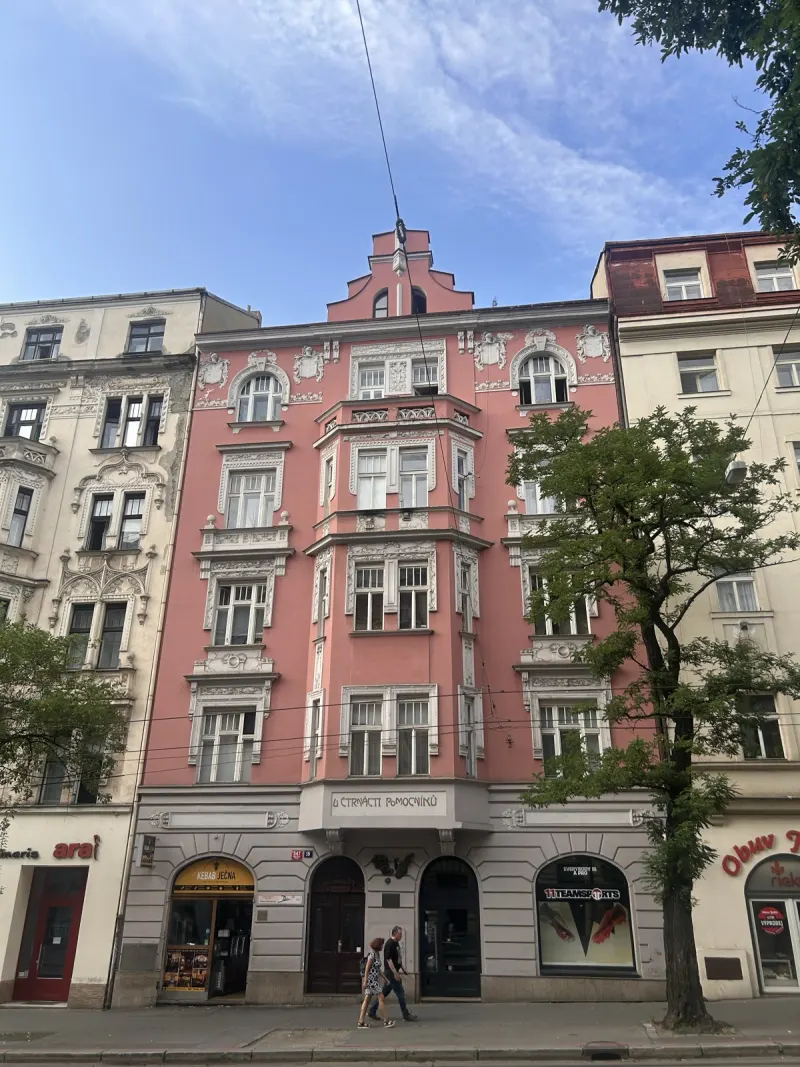 15 JečnáPraha 2 · 1908 · Jan Gabriel VoráčekPhoto: @Pontus
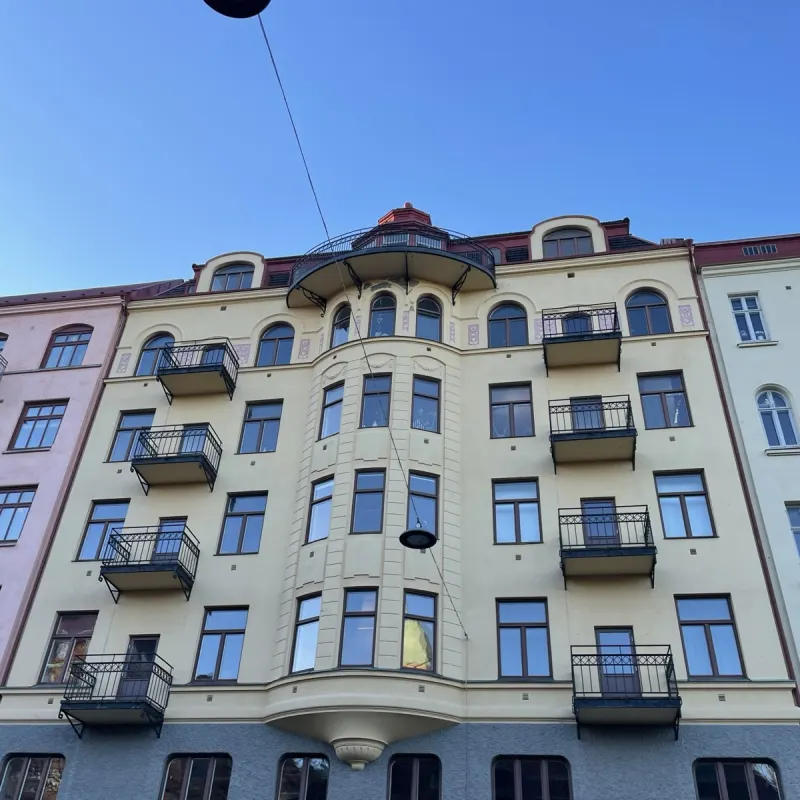 Molinsgatan 10Göteborg · 1912Photo: @Pontus
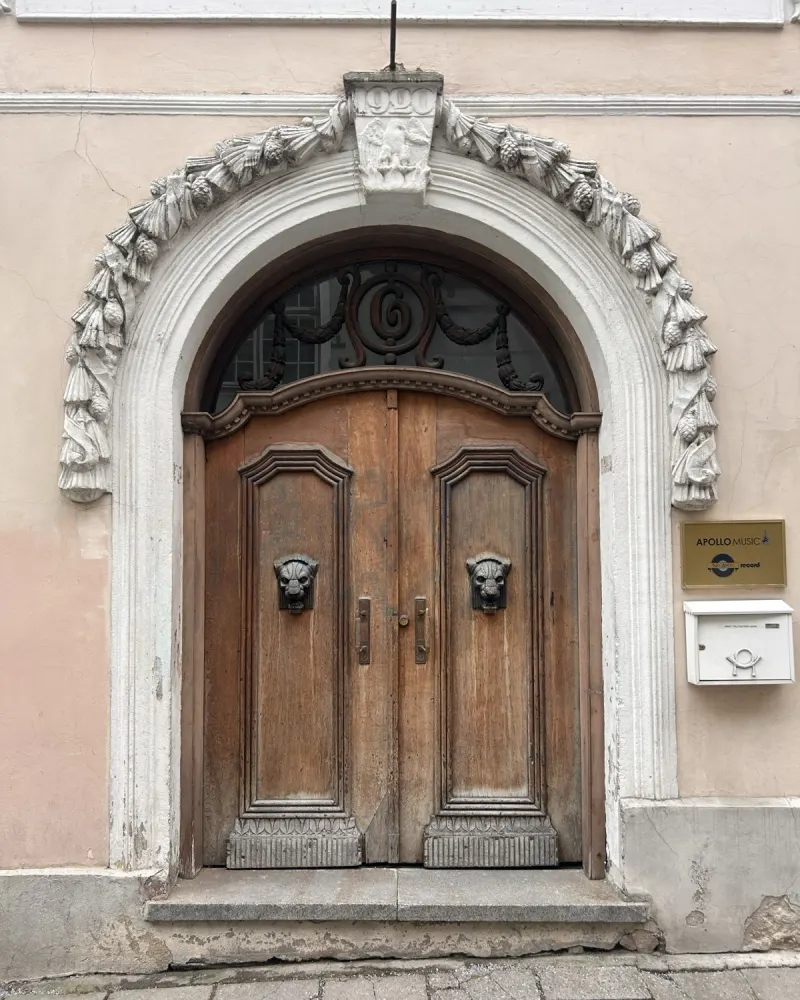 Pikk tn 6Tallinn · 1920 · Ernst Gustav KühnertPhoto: @Bovin
07. Often confused with
National Romanticism. Art Nouveau is light, soft and international; National Romanticism is dark, heavy and wants to be Swedish. Engelbrekt Church in Stockholm has traits of both.
Neo-Renaissance. Neo-Renaissance is heavy and imitates stone – ashlar render, pediments over the windows and strong cornices. Art Nouveau keeps the render smooth and soft, and the ornament takes the façade's own colour. And the windows? Neo-Renaissance windows have surrounds and pediments. Art Nouveau windows often sit straight in the smooth render, with no surround at all.
Sources
- lex.dk (Den Store Danske): "Sverige – arkitektur – 1850 til i dag"
- Olle Svedberg: Arkitekternas århundrade – Europas arkitektur 1800-talet (Arkitektur förlag, 2001)
- Henrik Ranby: Jugendepoken i Malmö. Arkitekter och byggnader 1896–1914 (Skönhetsrådet i Malmö, 1996)
- Pontus Bovin: Landshövdingehusets bebyggelsehistoria (Uppsala universitet, Campus Gotland, 2023)
- Swedish Wikipedia: "Jugend"
- Eva Eriksson: "Arkitekturen i Stockholm kring sekelskiftet 1900 – form, idéer och influenser", i Heikki Ranta (red.): Internationellt, nationellt, lokalt (Länsstyrelsen Gotlands län, 2005)
- Cecilia Björk & Laila Reppen: Tidstypiskt – arkitekturdetaljer i flerbostadshus 1880–1980 (Svensk byggtjänst, 2016)