01. In search of the Swedish
Around 1900, artists, writers and architects all over the Nordic countries are searching for a national identity. In architecture this means turning away from the borrowed international styles and looking for models closer to home: the castles of the Vasa era, the Baroque of the age of greatness, medieval churches and the timber houses of the peasantry. In Skåne and southern Sweden, inspiration also comes from Scanian and Danish castles and the Late Gothic of the Hanseatic towns.
Materials should show and be honest – handmade brick, natural stone, timber and copper. Craftsmanship is held high, and plans are happily asymmetrical. The critic August Brunius even proposes the name "National Realism".
The roots are in England. The Arts and Crafts movement, John Ruskin and William Morris preach honest craft and local materials – and Swedish architects listen. As early as 1893 Carl Westman condemns the revival architecture of the day in Dagens Nyheter as a masquerade in borrowed clothes. Thirteen years later he shows the alternative. The Swedish Society of Medicine in Stockholm, completed in 1906: handmade red brick, white-barred windows, a pale stone base and a small oriel above the entrance. No borrowed style. The wall, the door, the windows and the roof tiles carry the expression themselves.
The word National Romanticism does not exist at the time. It is coined afterwards, by Johnny Roswall, and is still debated. Was it even romantic? The movement sought beauty in material, construction and function – which is why both National Realism and Material Realism have been proposed instead.
Then comes the war. In the uneasy years of the 1910s the ideals break through on a broad front. P-O Hallman plans Lärkstaden, Eriksberg and Högalid with curving streets and small squares, modelled on medieval towns. The first SKB co-operative housing is completed in 1917 in the Motorn and Vingen blocks. Façades grow heavy and closed: dark, hard-fired brick in English cross bond, patterned brickwork, brick arches over the windows and angular bay windows. The entrance is strikingly small – but set in a heavy surround of dressed stone. Other buildings are rendered with mica mixed in, and the whole façade glitters in the sun.
The masterpiece is Stockholm City Hall, designed by Ragnar Östberg and inaugurated on Midsummer's Eve 1923, built from almost eight million bricks. Around it stand Carl Westman's Courthouse in Stockholm (1911–1915), Lars Israel Wahlman's Engelbrekt Church (consecrated 1914) and Gustaf Wickman's Kiruna Church (1909–1912). Even Gothenburg's landshövdingehus get National Romantic dress in the 1910s: dark brown façades, large multi-paned windows, oval windows and crenellations – medieval defences, now purely decorative. During the 1910s a stricter classicism takes over, and the City Hall already has one foot in it.
02. How to spot it
- 1.Dark, handmade brick and rough-hewn granite
- 2.Tarred or falu-red timber with white, brown or green trim
- 3.Steep, broken roofs with dormers
- 4.Small-paned windows
- 5.Asymmetrical plans and heavy, compact volumes
- 6.Models in Vasa castles, medieval churches and vernacular houses
- 7.Brick in English cross bond with patterned brickwork and blind niches
- 8.A small, off-centre entrance in a heavy surround of dressed stone
- 9.Through-coloured render mixed with mica that glitters in the sun
03. The giveaway
The colour and the glazing bars. Dark, almost black or reddish-brown façades, small panes and crenellations or oval windows in the gables – then you are in the 1910s.
Read the façade
- A tower with a steep spire
- Narrow slits in the tower
- A steep roof
- Small round-arched windows
- A small door in a heavy surround
04. Architects and builders
- Ragnar Östberg
- Carl Westman
- Lars Israel Wahlman
- Gustaf Wickman
- Fredrik Lilljekvist
- Agi Lindegren
- Sigfrid Ericson
05. Where to see it
- Stockholm City Hallinaugurated 23 June 1923
- The Courthouse, Stockholm1911–1915
- Engelbrekt Church, Stockholmconsecrated 1914, with the highest church vault in Scandinavia, 32 metres
- Kiruna Church1909–1912
- Masthugget Church, Gothenburg1911–1914
- The Röhsska Museum, Gothenburg
- The Biological Museum, Djurgården, Stockholm1893
- The Swedish Society of Medicine, StockholmCarl Westman, 1906
- Lärkstaden, StockholmP-O Hallman's town plan, 1910s
06. In the app
10 places in this style in Everyday Grandeur, added by the app's users. Tap a place to see it on the map.
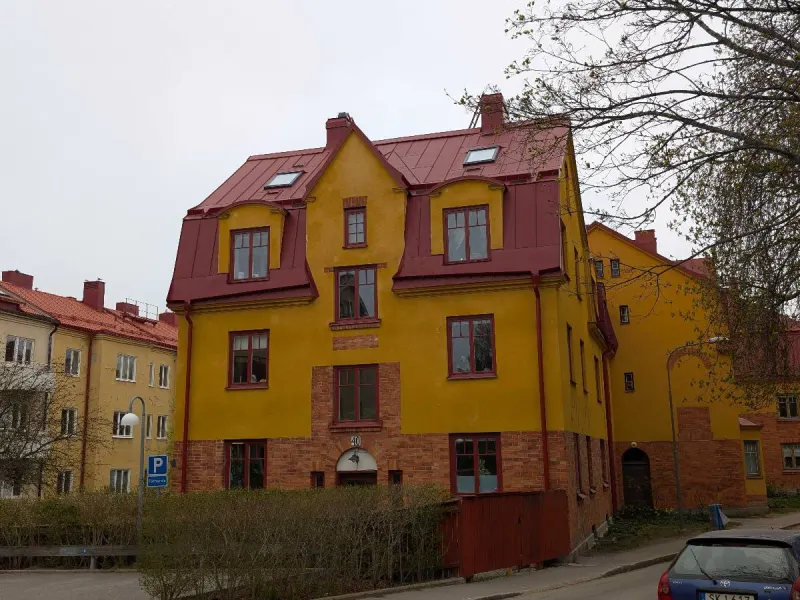 Tegelbruksvägen 40Stockholm · 1910 · Hagstrand och LindbergPhoto: @Pontus
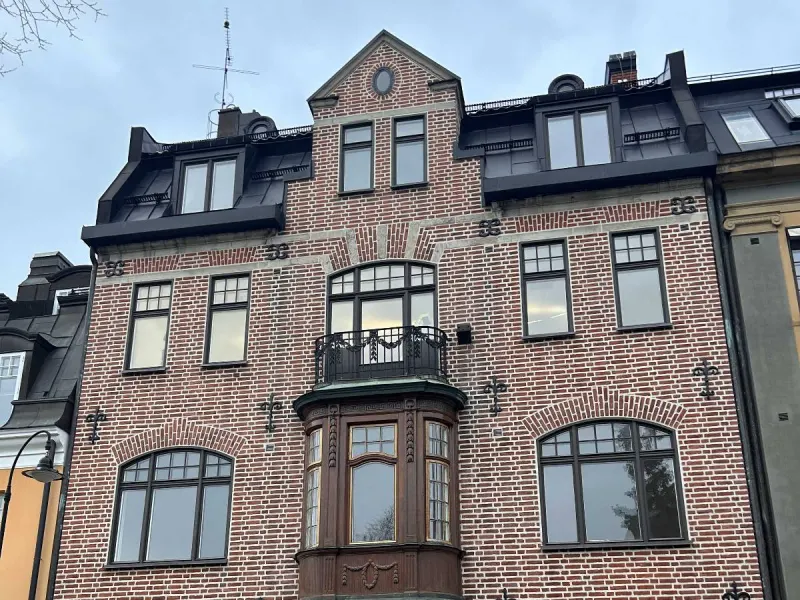 Tyrgatan 5Stockholm · 1910 · Erik JosephsonPhoto: @Pontus
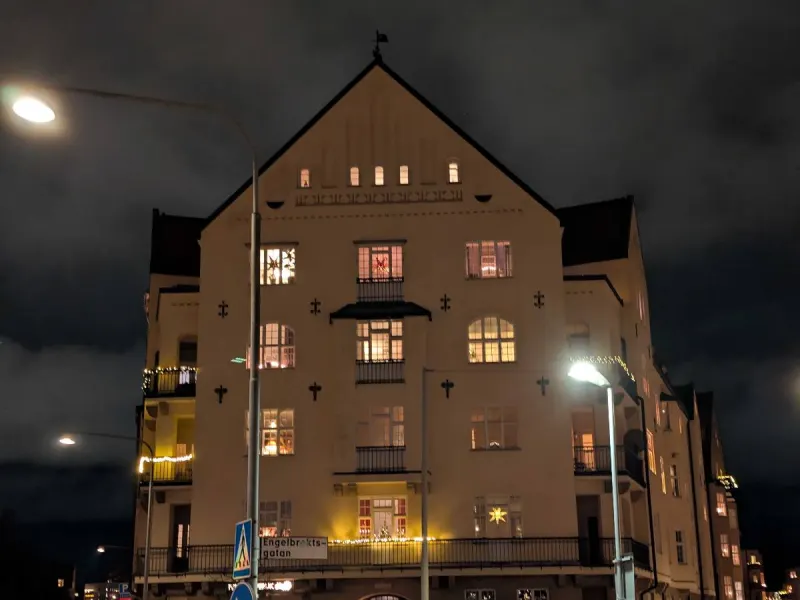 Engelbrektsplan 1Stockholm · 1912 · Axel BrunskogPhoto: @Pontus
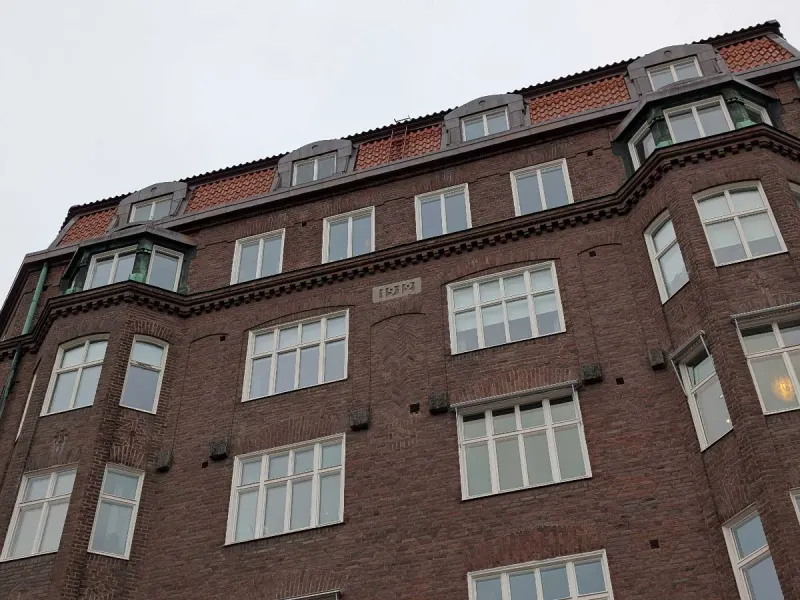 Karlbergsvägen 44Stockholm · 1912 · Folke ZettervallPhoto: @Pontus
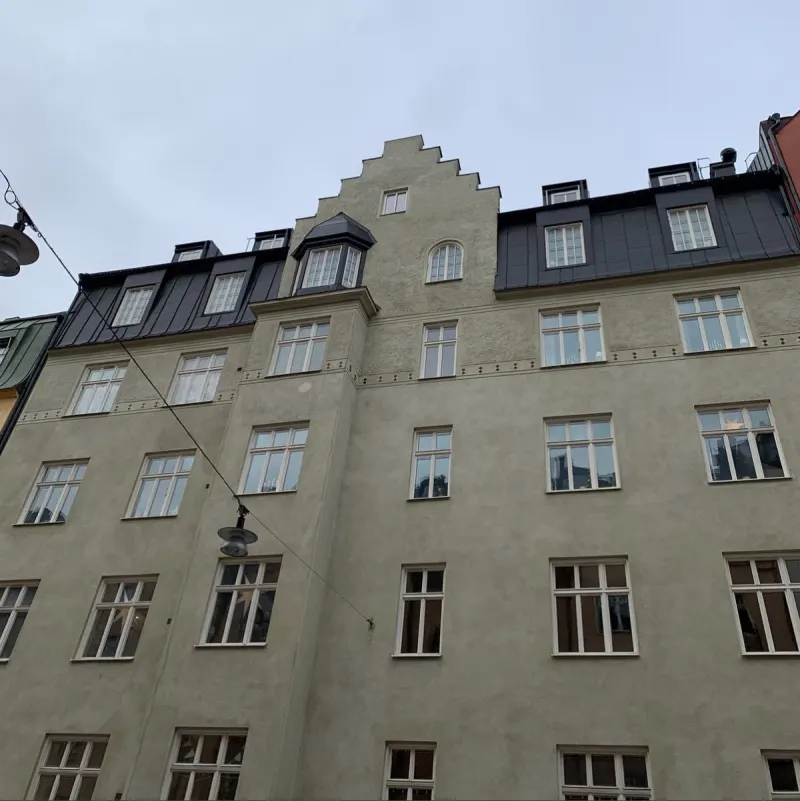 Sankt Eriksgatan 15Stockholm · 1912 · Hagström & EkmanPhoto: @Pontus
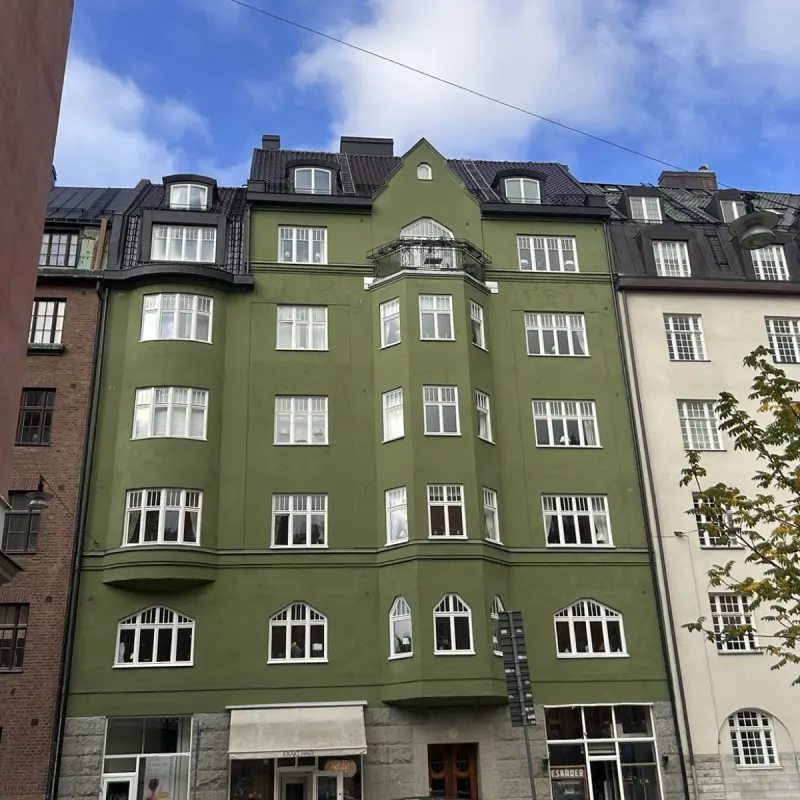 Grevgatan 69Stockholm · 1913 · Ivar EngströmPhoto: @Pontus
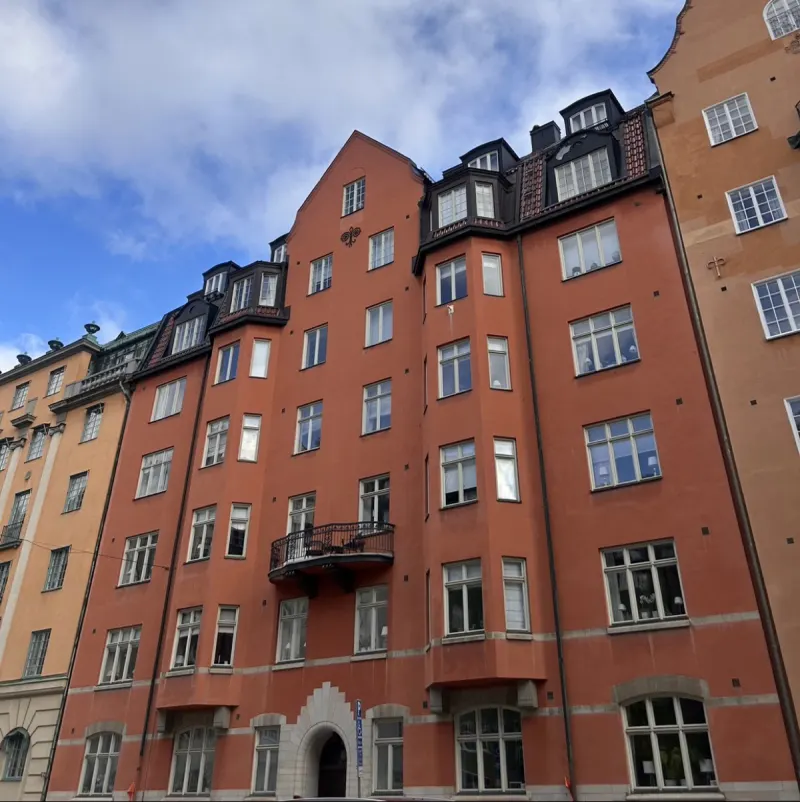 Östermalmsgatan 97Stockholm · 1913 · Victor BodinPhoto: @Pontus
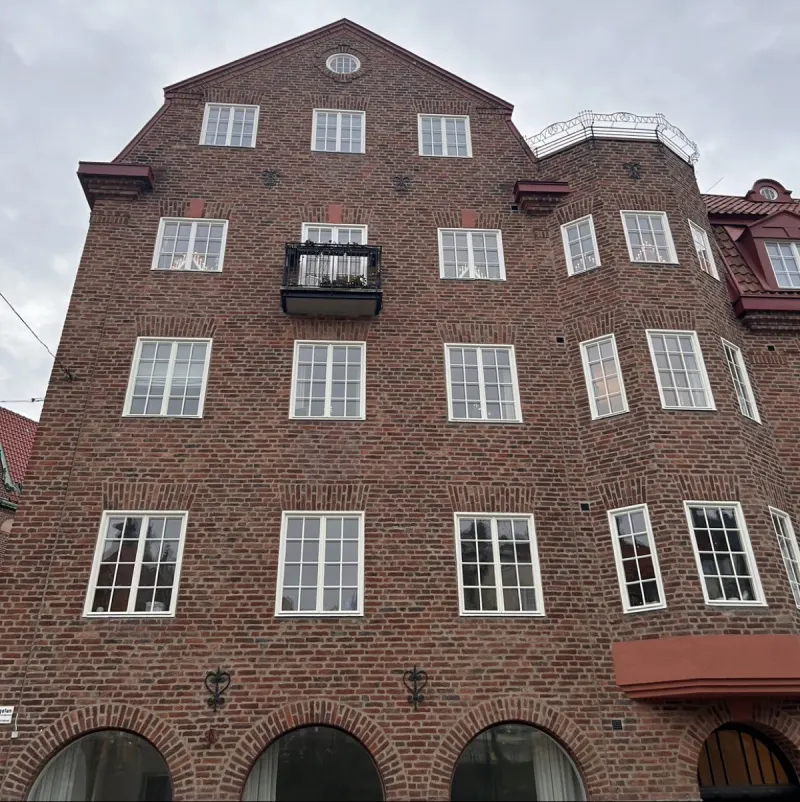 Östermalmsgatan 18Stockholm · 1917 · Ivar EngströmPhoto: @Pontus
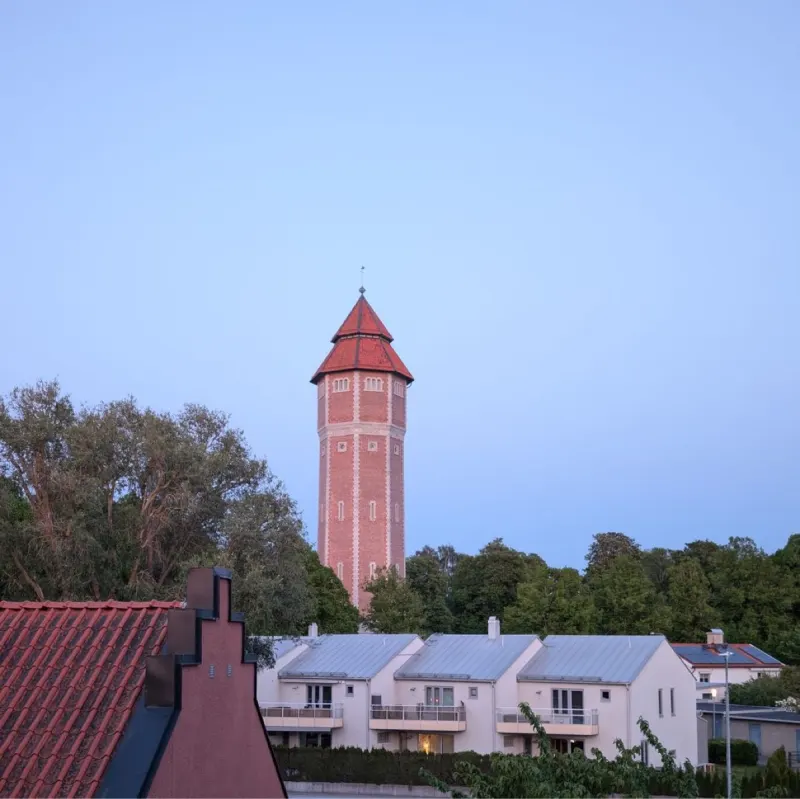 Vattentornet i VisbyVisby · 1925Photo: @Pontus
- Qüllə Küçəsi 16Bakı · 1890Added by: @PrussianPerson
07. Often confused with
Art Nouveau. Art Nouveau is light, soft and international; National Romanticism is dark, heavy and wants to be Swedish. Swedish Grace. The calm, classical traits of the City Hall already point towards the 1920s.
Sources
- Nationalencyklopedin (ne.se)
- lex.dk (Den Store Danske): "Sverige – arkitektur – 1850 til i dag"
- Olle Svedberg: Arkitekternas århundrade – Europas arkitektur 1800-talet (Arkitektur förlag, 2001)
- Pontus Bovin: Landshövdingehusets bebyggelsehistoria (Uppsala universitet, Campus Gotland, 2023)
- Cecilia Björk & Laila Reppen: Tidstypiskt – arkitekturdetaljer i flerbostadshus 1880–1980 (Svensk byggtjänst, 2016)
- Swedish Wikipedia: "Nationalromantik", "Stockholms stadshus", "Engelbrektskyrkan"
- Eva Eriksson: "Arkitekturen i Stockholm kring sekelskiftet 1900 – form, idéer och influenser", i Heikki Ranta (red.): Internationellt, nationellt, lokalt (Länsstyrelsen Gotlands län, 2005)